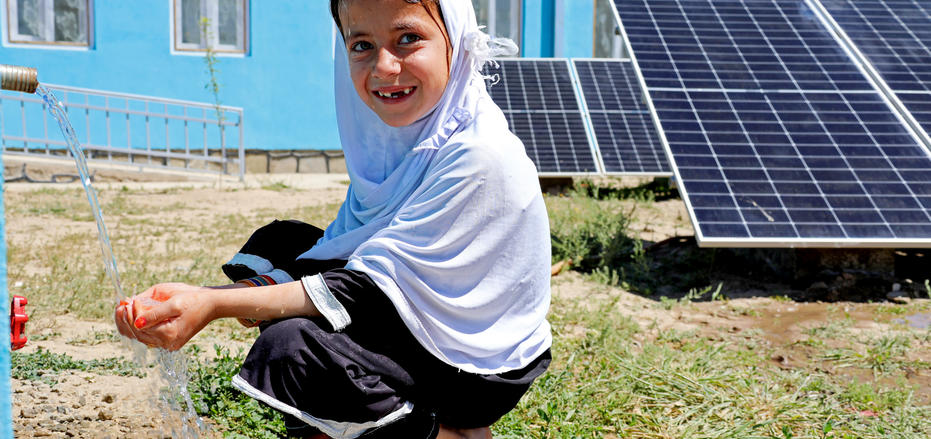
In the remote villages of Afghanistan's central highlands, solar panels are powering a transformation. Communities that once struggled to access clean water are now benefiting from sustainable, solar-powered water systems that provide reliable access year-round.
A Sustainable Solution
The lack of reliable electricity has long been a barrier to water access in rural Afghanistan. Traditional diesel pumps are expensive to operate and maintain, often breaking down at critical times. Solar-powered systems offer a sustainable alternative.
"Before, we had to walk two hours to fetch water," says Zahra, a young girl from Bamyan Province. "Now, clean water comes right to our village. I have more time for school."
Community-Led Implementation
UNDP works closely with communities throughout the project cycle. Local residents are involved in site selection, construction, and ongoing maintenance, ensuring ownership and sustainability.
Each system includes:
- Solar panels and battery storage for reliable power
- Deep well pumps accessing groundwater
- Storage tanks and distribution networks
- Water points designed for safe, easy access
Health and Economic Benefits
The impact extends far beyond water access. Waterborne diseases have decreased by 60% in communities with new systems. Women and girls, who traditionally bear the burden of water collection, now have time for education and economic activities.
Scaling Up
With support from the Green Climate Fund, UNDP is expanding the programme to reach 500 communities by 2027. The initiative demonstrates how climate solutions can address multiple development challenges simultaneously.